gently cooked pet food
Gently Cooked Pet Food: A Fresh, Raw-Look Product With Proven Safety and Shelf Life
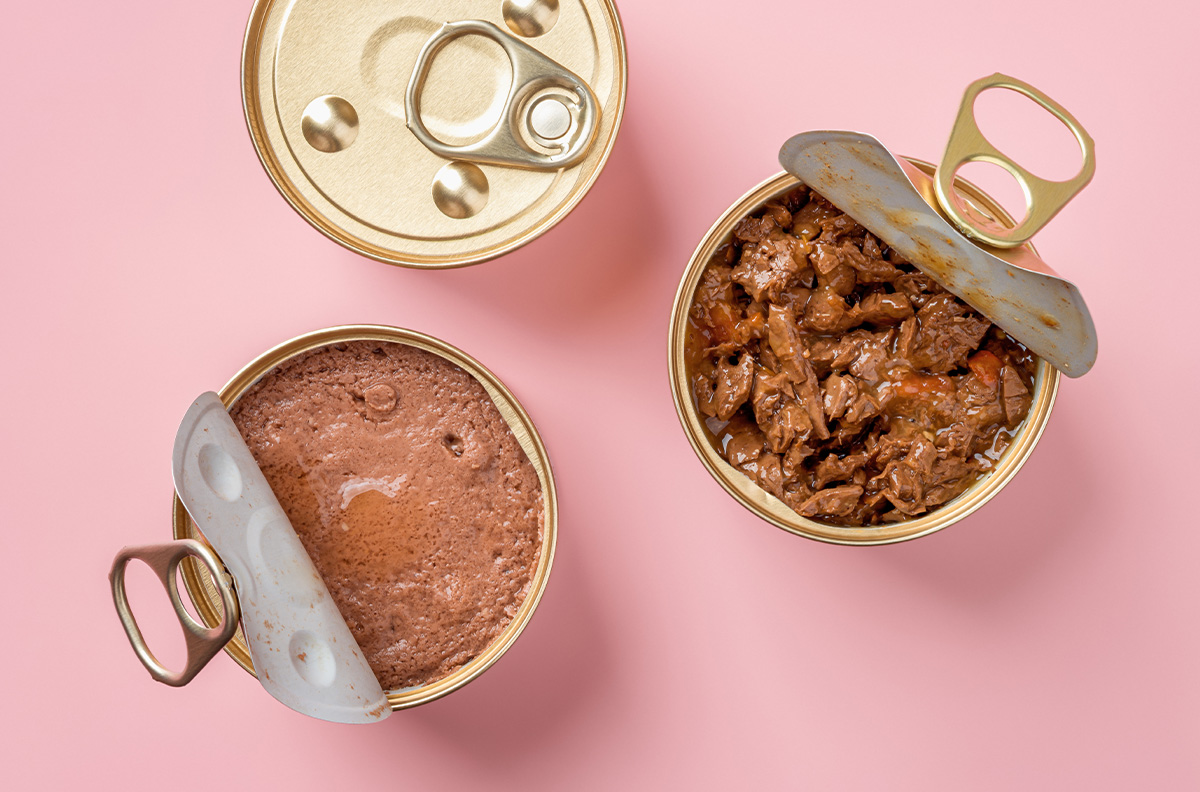
Gently cooked pet food is one of the fastest-moving premium categories in the UK, and it sells on what owners see in the bowl: real pieces of meat, natural colour and a product that looks fresh rather than processed. The problem is that the heat needed for microbiological safety and shelf life is the same heat that turns raw-looking meat grey. TasteBond supports pet food manufacturers with thermal processing and development trials that find the process window where a product keeps its fresh appearance and still hits its safety and shelf life targets.
The challenge: a raw look with a cooked level of safety
Premium pet food brands want minimal processing. Owners are paying for fresh, and they judge it by eye. Meat protein starts to change colour well below the temperatures traditionally used for pet food, so every degree and every minute of extra heat shows on the finished product.
Underdo it and the risk moves the other way. Raw meat ingredients carry Salmonella, Listeria and pathogenic E. coli, and a pet food that isn't properly treated puts both the animal and the household handling it at risk. Chilled products in sealed, low-oxygen packs also need the shelf life set against spore-forming bacteria, not just vegetative pathogens. On top of that, UK animal by-product rules set heat treatment requirements for processed pet food, so the process has to satisfy the regulations as well as the brand.
That leaves five things competing for the same narrow window: process severity, food safety, shelf life, nutritional retention and the sensory quality of the finished product. Get the balance wrong on any one of them and the product fails, either on the shelf or in the market.
Our approach to gently cooked pet food development
Comparing gentle heat treatments and pasteurisation
Trials take the same recipe through a range of time and temperature combinations, from gentle cooking through to full pasteurisation. Each combination is assessed for the lethality it delivers against the target pathogens and for what it does to colour, texture and appearance. The aim is the lowest severity that reliably achieves the safety target, with the evidence to prove it.
Heat penetration in chunky, mixed pet food products
Gently cooked pet foods are hard to validate. They are rarely uniform: large meat pieces, offal, vegetables and binders all heat at different rates, and the slowest-heating piece sets the process. Heat penetration studies place probes in the largest and densest components, at the slowest-heating position in the pack, so the process is built on the true cold spot. When the process margin is this tight, a probe in the wrong place is the difference between a safe product and a recall.
Pet food pasteurisation in pouches, trays and tubs
Packaging format changes the process as much as the recipe. A flat pouch heats quickly and evenly. A deep tub has a cold spot buried in the centre that can lag well behind the surface, which means overcooking the outside to treat the middle. Trials compare pouches, trays and tubs under the same conditions, measuring the cold spot in each, so the format decision is made on how well it supports a gentle process, not just how it looks on shelf.
Cooking methods and process routes
Gently cooked products can be cooked before packing, cooked in pack, or a combination of both. Each route changes where contamination risk sits and how much heat the product needs after sealing. Trials compare cooking methods side by side so the chosen route delivers the safety target with the least impact on the product.
Fresh pet food shelf life and microbiological safety
Process trials run alongside shelf life work. Products are stored at their intended conditions, chilled or frozen, and tested through shelf life for microbiological stability and quality. That confirms the gentle process holds up to the date on the pack, and shows how much shelf life each step down in process severity costs.
Nutritional retention in pet food
Gentle processing is also a nutritional story, and it is one owners care about. Heat-sensitive nutrients such as thiamin are especially important in cat food, and taurine can leach out of meat into the surrounding liquor. Measuring retention across process conditions shows the nutritional benefit of a gentler route and supports the formulation and any claims made on pack.
Sensory characteristics and appearance
For gently cooked pet food, appearance is a commercial specification. Colour, piece definition, texture and aroma are assessed for every process condition, so the final process is chosen on the full picture: safe, stable, nutritious and still looking like the product the brand is selling.
What TasteBond delivers for pet food manufacturers
- Pet food thermal processing trials comparing time and temperature combinations, from gentle cooking to pasteurisation
- Heat penetration studies identifying the slowest-heating components and positions in the pack
- Packaging format comparisons across pouches, trays and tubs
- Shelf life and microbiological data supporting the chosen process
- Nutritional retention and sensory assessment across process conditions
- A defined, validated process with documentation to support HACCP and regulatory compliance
The results: premium pet food that looks fresh and is proven safe
- A process window that keeps the fresh, minimally processed appearance owners pay for
- Microbiological safety validated at the true cold spot of the product and pack
- Shelf life set on data, not assumption
- Packaging and cooking route chosen on processing performance as well as shelf appeal
- Better nutritional retention from a gentler, optimised process
- Documentation that supports compliance and customer scrutiny
FAQ
What is gently cooked pet food?
Gently cooked pet food is heat treated at lower temperatures than traditional canned or extruded pet food. The aim is to keep the look, texture and nutrition of fresh ingredients while still controlling pathogens and achieving a usable shelf life.
How do you make pet food look raw but stay safe?
By finding the lowest time and temperature combination that still delivers the required lethality at the slowest-heating point in the product. Heat penetration studies identify that point, and process and shelf life trials confirm safety and appearance together.
Is pasteurised pet food safe?
Yes, when the process is validated. Pasteurisation controls vegetative pathogens such as Salmonella and Listeria. Because it does not destroy all spores, chilled or frozen storage and a properly set shelf life complete the safety system.
What packaging works best for gently cooked pet food?
Thin, flat formats such as pouches heat fastest and most evenly, which suits a gentle process. Deeper trays and tubs have slower-heating centres, so the process has to be validated for each format rather than assumed.
About TasteBond
TasteBond is a UK food and drink consultancy based in the Cotswolds, run by Connor Bond. Connor's background runs from Michelin-level kitchens to food manufacturing and thermal processing at Campden BRI. TasteBond covers new product development, thermal process validation, shelf-life work and HACCP for food and drink brands and manufacturers across the UK.
Book a discovery call
Developing a gently cooked or fresh pet food, or looking to bring down the process on an existing range? Book a discovery call with TasteBond and we'll talk through the trials that get your product to a safe, stable and fresh-looking finish.
Email us at: connor.bond@tastebond.co.uk
Or use our quick enquiry form here. We look forward to hearing from you!