sugar reduction in biscuits
Sugar Reduction in Biscuits Without Losing the Bite
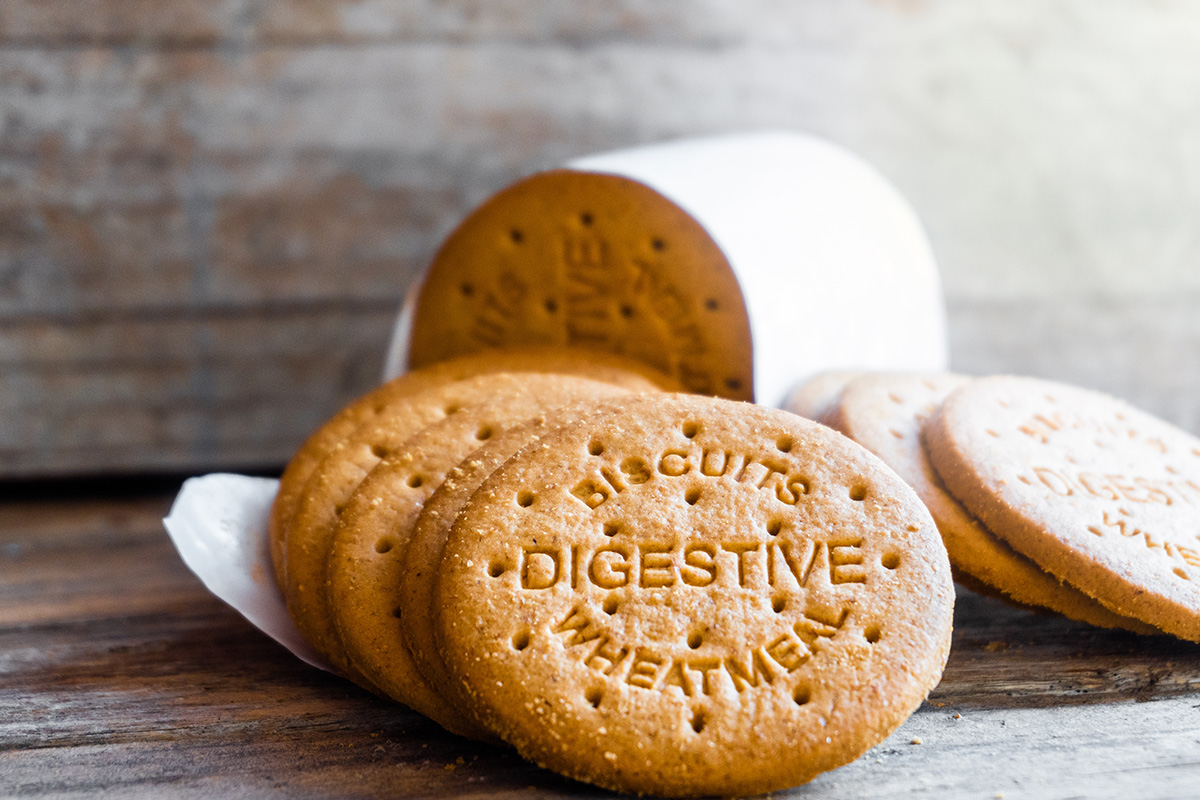
TasteBond works on sugar reduction in biscuits, cutting sugar and building fibre into classic digestive-style products. The brief is consistent: lower the sugar, slow the glycaemic response, and leave the snap, colour, crumb and mouthfeel untouched. The aim is a healthier biscuit that a regular buyer would not spot as reformulated.
The challenge
Sugar in a digestive does far more than make it sweet. It carries bulk and structure, drives the browning that gives the biscuit its colour and baked flavour, controls spread and moisture, sets the hardness and clean snap, and pulls down water activity so the product keeps. Take the sugar out and you break several of those functions at once. The biscuit goes pale, soft, cracks on cooling, or loses the short, crisp bite that defines the category.
The goal is not simply less sugar either. The aim is a lower blood glucose response and a more sustained release, driven by fibre, so the product suits health-conscious and reduced-sugar shoppers. That means adding functional fibre into a low-moisture baked matrix without turning the texture rubbery or dull, and doing it while the eating experience stays honest to a digestive.
There is a regulatory line running through all of this too. In the UK you cannot label a food as suitable for people with diabetes, and health claims are tightly controlled. So the work has to land inside permitted nutrition claims such as "no added sugar," "high fibre" and, where thresholds allow, "sugar-free," backed by real data rather than loose wording.
Our approach to sugar reduction in biscuits
The work begins by mapping what the sugar is actually doing in that specific recipe, function by function, before any substitution. Replacing sweetness is the easy part. Replacing bulk, browning, spread and texture is the work.
From there the reformulation uses a layered strategy:
- A bulk sweetener to replace the mass sugar provides and hold onto structure and browning.
- A high-intensity sweetener to restore sweetness without adding bulk, dosed to avoid any lingering aftertaste.
- A soluble prebiotic fibre to carry the fibre load and slow the glycaemic response, which also helps binding once the sugar is gone.
Each iteration is measured against the original biscuit as the reference, not against a spec sheet. Snap and hardness are checked on a texture analyser, colour is measured rather than judged by eye, and moisture and water activity are tracked to protect crispness and shelf life. A sensory panel then compares the reformulated biscuit against the standard product, so decisions come from tasting, not theory.
The tradeoffs are handled directly. Bulk sweeteners change how the biscuit sets and can crack on cooling, so mixing and cooling are adjusted. The fibre binds water and shifts the dough and bake colour, so hydration and the bake profile are retuned to suit.
What is delivered
The output is a production-ready reformulated recipe, an ingredient specification, and the mixing and bake parameters to run it on the line. Alongside that comes claims guidance covering which nutrition claims the finished product qualifies for, and scale-up support to move the recipe off the bench and onto plant equipment without the texture drifting.
The results
In this type of work, the target is a reduced-sugar, higher-fibre biscuit that keeps the classic digestive character:
- Sugar cut while the eating experience stays true to the original
- Fibre built into the biscuit for a stronger nutritional profile
- A lower and more sustained glycaemic response from the fibre
- Products designed to sit inside permitted UK nutrition claims rather than loose wording
- Texture, snap and colour designed to be validated through sensory testing against the reference
FAQ
How do you reduce sugar in a biscuit without changing the texture?
By replacing sugar function by function, not just for sweetness. A bulk sweetener restores mass and browning, a soluble fibre restores binding, and a high-intensity sweetener tops up sweetness, with texture analysis and sensory panels confirming the result matches the original.
Which sugar alternatives work best in biscuits?
Usually a blend rather than a single swap. A polyol covers bulk and structure, a high-intensity sweetener covers sweetness, and a soluble fibre adds fibre and a lower glycaemic response. The right ratio depends on the recipe.
Can you add fibre to a biscuit without affecting the taste?
Yes, if the fibre is chosen for the format. A soluble prebiotic fibre integrates into a low-moisture baked matrix with minimal flavour impact and can even improve binding once the sugar is removed.
Can a reduced-sugar biscuit be sold as suitable for diabetics?
Not with that wording in the UK. The compliant route is permitted claims such as "no added sugar" and "high fibre," supported by a lower glycaemic response backed by data.
About TasteBond
TasteBond is a UK food and drink consultancy based in the Cotswolds, run by Connor Bond. Connor's background runs from Michelin-level kitchens to food manufacturing and thermal processing at Campden BRI. TasteBond covers new product development, thermal process validation, shelf-life work and HACCP for food and drink brands and manufacturers across the UK.
Book a discovery call
If you are looking to cut sugar or build fibre into a biscuit, snack or bakery product without losing what customers already like about it, book a discovery call with TasteBond and we will talk through the reformulation route for your product.
Email us at: connor.bond@tastebond.co.uk
Or use our quick enquiry form here. We look forward to hearing from you!